about 50 million years ago
Whales Return to the Sea
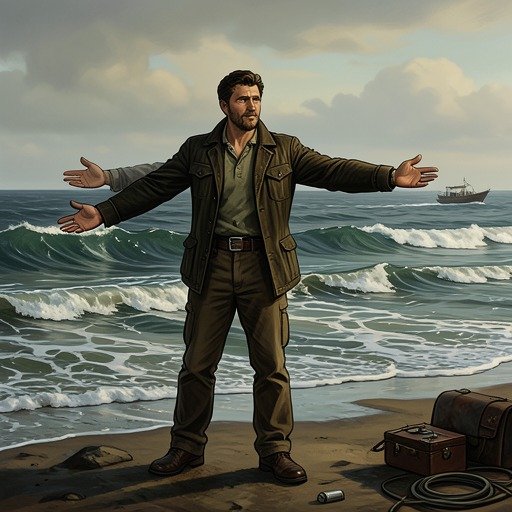
Early whale ancestors lived on land before gradual changes carried their descendants into the ancient Tethys Sea. Four-legged forms such as [Pakicetus](entity:creature-recall-creature-49460cfc7280) gave way to more aquatic creatures, and the lineage eventually produced the whales that would inhabit every ocean.
antiquity
The Whale in Ancient Myth
Long before people could observe whales underwater, they imagined the great animals as sea monsters, divine instruments, and vessels of catastrophe. Stories of [Jonah](entity:character-recall-character-jonah-b2b9e5099135), Sinbad, and other engulfed wanderers made the whale a figure of both terror and miraculous survival.
Middle Ages
The Unicorn Trade
[Narwhal](entity:creature-recall-creature-narwhal-4ff31ee777e1) tusks reached European markets as supposed unicorn horns, valued as royal treasures and remedies for poison and melancholy. Their trade depended on the distance between the [Arctic](entity:location-recall-location-arctic-273ab0a0ca33) animal and the legend made from its tooth; only later observation exposed the tusk’s true origin.
by the ninth century
Whales Along the Whale-Road
Viking seafarers hunted whales off [Norway](entity:location-recall-location-7fceb8f3598f) and exported whale meat to [England](entity:location-recall-location-edbf4fdebc64). The northern sea became a whale-road: a route for trade and travel, but also an early expression of human reliance on the animals and the resources they supplied.
sixteenth and seventeenth centuries
Dutch Whale Strandings
[Whales](entity:creature-recall-creature-whales-10c56bad6d95) cast ashore in the Netherlands drew crowds, artists, and authorities. Paintings and prints turned the animals into public spectacles and signs of political or religious upheaval, while the stranded bodies were also treated as valuable property.
1658
The Thames Whale
A right whale entered the Thames during a storm and drew a vast crowd. After a long struggle, people killed it with harpoons; its appearance was taken as an omen of Oliver Cromwell’s approaching death, and its bones became a roadside curiosity.
1659
Nantucket Settlement
Quaker settlers acquired rights to [Nantucket](entity:location-recall-location-nantucket-3f142af0df8e) after facing religious persecution in [New England](entity:location-recall-location-new-england-ef140e738f2b). The remote island’s isolation, abundant marine life, and inherited knowledge from Indigenous inhabitants would shape a community whose fortunes became bound to whaling.
1690
A Green Pasture at Sea
Islanders watching whales from a hill imagined the animals as a future source of bread for their descendants. The remark captured the moment when whales began to appear not merely as wildlife but as an economic destiny for [Nantucket](entity:location-recall-location-nantucket-3f142af0df8e).
1712
Hussey Finds Sperm Whales
According to the island’s whaling legend, [Christopher Hussey](entity:character-recall-character-christopher-hussey-a4c2d4aa2990) was blown beyond the usual fishing grounds and encountered sperm whales in deep water. Their discovery redirected [Nantucket](entity:location-recall-location-nantucket-3f142af0df8e)’s industry toward a more profitable quarry and helped initiate centuries of intensive hunting.
eighteenth century
Whaling Becomes an Industry
[Nantucket](entity:location-recall-location-nantucket-3f142af0df8e) and other ports developed a sustained trade in whale oil and baleen. Shipboard try-pots made it possible to process blubber at sea, extending voyages and turning the whale into fuel for commerce, domestic lighting, and growing industry.
1748
Nantucket Candle Works
Jacob Rodriques Rivera brought the manufacture of spermaceti candles to [New England](entity:location-recall-location-new-england-ef140e738f2b). The painstaking process separated and pressed material from sperm-whale heads, producing clean-burning candles and substantial fortunes for an island economy increasingly built on the bodies of whales.
late seventeenth to eighteenth century
Britain Enters Arctic Whaling
British ships competed with Dutch fleets for the [Arctic](entity:location-recall-location-arctic-273ab0a0ca33) whale fisheries, but their efforts rose and fell with wars, prices, and government policy. By the mid-eighteenth century, British ports had established a growing industry that joined maritime expansion to the demand for oil and baleen.
late eighteenth century
Scoresby Takes to the Arctic
[William Scoresby Sr.](entity:character-recall-character-william-scoresby-sr-db6b3bfc9aab) built his career in [Arctic](entity:location-recall-location-arctic-273ab0a0ca33) whaling, rising to command ships and helping make the trade a source of civic pride in [Whitby](entity:location-recall-location-whitby-7c143d9b1040). His son, [William Scoresby Jr.](entity:character-recall-character-william-scoresby-jr-b8235a3eb0d1), would combine the same seafaring world with systematic scientific observation.
1788
The Pacific Whaling Route
[Samuel Enderby](entity:character-recall-character-samuel-enderby-53a8eb0f1944) sent the purpose-built [Amelia](entity:object-recall-object-amelia-355a0fe63898) into the Pacific, opening a long-distance British sperm-whale fishery. With ships equipped to render blubber at sea, whaling became a form of oceanic expansion that linked distant waters, ports, and imperial ambitions.
1791
Whaling Reaches Australia
[Samuel Enderby](entity:character-recall-character-samuel-enderby-53a8eb0f1944) established an office at [Port Jackson](entity:location-recall-location-f36abd8e0ab0) and arranged for whaling ships to carry convicts to [Australia](entity:location-recall-location-29432536e761). The ships supplied settlements and helped establish new colonial routes, making the whale trade part of a wider movement of people and imperial power.
1 August 1819
Melville’s Birth
[Herman Melville](entity:character-recall-character-herman-melville-df4458551f81) was born on Pearl Street in [Manhattan](entity:location-recall-location-manhattan-5036578184bd), in a New [York](entity:location-recall-location-7445402de87b) still marked by farmland, oyster shallows, and working wharves. His father’s print of a harpooned whale helped seed the child’s sense that he might one day become a voyager.
1830–1832
Melville Loses His Father
After his father’s bankruptcy, the Melville family moved from New [York](entity:location-recall-location-7445402de87b) to Albany. When Allan died in 1832, twelve-year-old Herman was left amid debt and family responsibility; the loss disrupted his security and helped turn him toward life at sea.
April 1825
The Tunstall Whale
A large sperm whale washed ashore at [Tunstall](entity:location-recall-location-tunstall-7e3c55d49b4e) on the [Yorkshire](entity:location-recall-location-yorkshire-1adea3c35af7) coast. Crowds came to see it, and its body was cut apart for oil, meat, and scientific study; [James Alderson](entity:character-recall-character-james-alderson-fafa865cef32) examined its anatomy while the animal’s remains became the basis for a landmark skeleton.
1825–1836
The Whale Skeleton Is Neglected
After the [Tunstall](entity:location-recall-location-tunstall-7e3c55d49b4e) whale had been stripped and buried, its bones were left scattered around Burton Constable’s grounds. Naturalists later found parts in a barn and a tail hanging in a tree, a disorderly afterlife for an animal that had briefly commanded public attention.
1820
Scoresby Publishes the Arctic
[William Scoresby Jr.](entity:character-recall-character-william-scoresby-jr-b8235a3eb0d1) published his account of the [Arctic](entity:location-recall-location-arctic-273ab0a0ca33) and its northern whale fishery, combining detailed observations with maps, illustrations, and descriptions of ice and wildlife. The work became a leading scientific record of the region and of the whaling that depended on it.
1813; published in Scoresby’s account in 1820
The Stone Lance Discovery
A [Whitby](entity:location-recall-location-whitby-7c143d9b1040) whaling captain showed Scoresby a stone lance embedded in a whale’s healed blubber. Its apparent Indigenous origin suggested that the animal had crossed from waters beyond the known Atlantic grounds, giving an unexpected clue to the possibility of a passage between oceans.
1836
The Whale Skeleton Is Articulated
Edward Wallis was engaged to assemble the [Tunstall](entity:location-recall-location-tunstall-7e3c55d49b4e) whale’s remains at Burton Constable. The articulated skeleton offered visitors a striking, if incomplete, physical representation of a sperm whale and became an important reference for later descriptions of the animal.
1830–1832
Beale Sails on the Kent
[Thomas Beale](entity:character-recall-character-thomas-beale-d75434c0176a) left medical study to sail on the whaler Kent, observing sperm whales across the Pacific and recording their behavior and anatomy. He also witnessed harsh treatment of the crew; in 1832 he deserted at the Bonin Islands and continued home aboard another ship.
1835–1839
Beale Publishes His Whale Study
After returning to [England](entity:location-recall-location-edbf4fdebc64), [Thomas Beale](entity:character-recall-character-thomas-beale-d75434c0176a) published an increasingly comprehensive account of the sperm whale, drawing on direct experience rather than inherited speculation. His descriptions supplied [Herman Melville](entity:character-recall-character-herman-melville-df4458551f81) with much of the scientific material that would later shape [Ishmael](entity:character-recall-character-ishmael-82722fc2d331)’s cetology.
1838
Douglass Escapes to New Bedford
[Frederick Douglass](entity:character-recall-character-frederick-douglass-f1641bd366f8) escaped slavery dressed as a sailor and settled in [New Bedford](entity:location-recall-location-new-bedford-42d4217c609f), where he performed hard manual work and found a community approaching freedom. The port’s whaling economy depended on exploited labor even as it offered fugitives a route toward safety.
June–September 1839
Melville’s First Voyage
At nineteen, [Herman Melville](entity:character-recall-character-herman-melville-df4458551f81) sailed from New [York](entity:location-recall-location-7445402de87b) to [Liverpool](entity:location-recall-location-liverpool-7a375e857bb9) aboard the St Lawrence. He experienced shipboard hardship, saw the poverty of Liverpool, and returned to find himself changed but still unable to support his family without going back to work.
3 January 1841
Melville Sails on the Acushnet
[Herman Melville](entity:character-recall-character-herman-melville-df4458551f81) joined the whaling ship [Acushnet](entity:object-recall-object-acushnet-8223642035bf) at [Fairhaven](entity:location-recall-location-b721464aa779) as a foremast hand. His small share of any future profits placed him within a rigid hierarchy of labor, and the voyage launched him into the dangerous, exhausting world that would supply material for Moby-Dick.
1841 onward
The Acushnet Hunts Whales
The [Acushnet](entity:object-recall-object-acushnet-8223642035bf) sailed into distant whaling grounds, where lookout calls sent small boats after sperm whales. The hunt joined precise teamwork to lethal risk: a harpoon line could tow a boat at great speed, and a whale’s flukes or jaws could kill the men pursuing it.
15 August 1841
The Coral Is Attacked
A sperm whale attacked the [New Bedford](entity:location-recall-location-new-bedford-42d4217c609f) ship Coral after its crew struck one of the animals in a school. It smashed boats and killed men before being fatally harpooned, adding to the reports of whales turning against their hunters that would feed Melville’s imagination.
1842
Melville Leaves the Acushnet
[Herman Melville](entity:character-recall-character-herman-melville-df4458551f81) deserted the [Acushnet](entity:object-recall-object-acushnet-8223642035bf) in the [Marquesas Islands](entity:location-recall-location-marquesas-islands-17d8ef987d3e) with his companion [Toby Greene](entity:character-recall-character-toby-greene-ad40c1a00ba3). Their escape from the ship’s authority began a period of travel and uncertainty that Melville would later transform into the [South Seas](entity:location-recall-location-south-seas-87e78c8b6cf4) narrative of Typee.
1840s
Thoreau Sees a Whale Hunt
During his walks on [Cape Cod](entity:location-recall-location-cape-cod-27c5cb8abdf1), [Henry David Thoreau](entity:character-recall-character-henry-david-thoreau-816043959154) encountered slaughtered pilot whales and then watched fishermen drive another school toward shore. He did not join the hunt, but his account made the animals’ suffering part of a broader question about what people mean when they claim to know the value of a whale.
October 1844
Melville Returns from the Sea
After years of travel and desertion, [Herman Melville](entity:character-recall-character-herman-melville-df4458551f81) returned to his family and began writing down his [South Seas](entity:location-recall-location-south-seas-87e78c8b6cf4) adventures. His first book, Typee, made him a literary sensation and gave him a public identity shaped by experiences far beyond ordinary domestic life.
1846–1849
Nantucket’s Decline Begins
A great fire damaged [Nantucket](entity:location-recall-location-nantucket-3f142af0df8e)’s businesses, while the silting harbor increasingly hindered large whale ships. The [California Gold Rush](entity:event-recall-event-b134f54085f1) drew young islanders away, and the town’s old supremacy gave way to the more accessible and ambitious port of [New Bedford](entity:location-recall-location-new-bedford-42d4217c609f).
1849
Melville Visits London
[Herman Melville](entity:character-recall-character-herman-melville-df4458551f81) traveled to [London](entity:location-recall-location-london-420923d4a60a) hoping to sell White-Jacket and support further writing. Walking the city, he encountered images and traces of whaling, including a disabled former sailor’s sign depicting men and boats crushed by a whale; the animal was already taking imaginative form in his mind.
5 August 1850
Melville Meets Hawthorne
At a picnic on [Monument Mountain](entity:location-recall-location-monument-mountain-480166c35dd1), [Herman Melville](entity:character-recall-character-herman-melville-df4458551f81) met [Nathaniel Hawthorne](entity:character-recall-character-nathaniel-hawthorne-651e0c191a3c). Their conversation and the landscape’s dramatic beauty intensified Melville’s sense that his whaling material could carry meanings beyond adventure, helping redirect the book he was writing toward a darker and more ambitious work.
1850–1851
The Whaling Book Changes
While living at [Arrowhead](entity:location-recall-location-arrowhead-7227cd0a78fd), [Herman Melville](entity:character-recall-character-herman-melville-df4458551f81) read widely and revised his planned romance of whaling into a complex meditation on fate, power, and evil. He drew on personal experience, [Thomas Beale](entity:character-recall-character-thomas-beale-d75434c0176a)’s science, and the example of [Nathaniel Hawthorne](entity:character-recall-character-nathaniel-hawthorne-651e0c191a3c) as the whale grew into a literary and symbolic force.
during the composition of Moby-Dick
The Essex Story Enters the Book
[Herman Melville](entity:character-recall-character-herman-melville-df4458551f81) drew on accounts of the Essex, whose crew had been forced into open boats after a sperm whale destroyed their ship. The survivors’ ordeal, including starvation and cannibalism, gave the novel a documented history of human vulnerability before the whale.
1839 account; influential during composition in 1850
Mocha Dick Becomes a Model
[Jeremiah Reynolds](entity:character-recall-character-jeremiah-reynolds-9702691d0d86)’s story of [Mocha Dick](entity:character-recall-character-mocha-dick-88d19c87a4cd) described a white sperm whale that attacked whalers and survived repeated assaults. Together with other accounts of whale attacks, it offered [Herman Melville](entity:character-recall-character-herman-melville-df4458551f81) a model for the feared and elusive animal that would become [Moby Dick](entity:character-recall-character-moby-dick-baab1bed7b3a).
14 November 1851
Melville Gives Hawthorne the Book
At the Little Red Inn in [Lenox](entity:location-recall-location-lenox-f39e15df28d7), [Herman Melville](entity:character-recall-character-herman-melville-df4458551f81) presented [Nathaniel Hawthorne](entity:character-recall-character-nathaniel-hawthorne-651e0c191a3c) with a finished copy of Moby-Dick. Hawthorne’s understanding of the book mattered deeply to Melville, who described feeling recognized by the older writer and bound to him by an unusually intense fellowship.
1851
Moby-Dick Is Published
Moby-Dick appeared in Britain as The Whale and in the United States as a single-volume book. The British edition omitted [Ishmael](entity:character-recall-character-ishmael-82722fc2d331)’s survival, while the American edition restored it; neither sold well, and the novel’s scale and strangeness left its first readers divided.
1851
The Ann Alexander Is Attacked
News that a whale had stove in the Ann Alexander reached [Herman Melville](entity:character-recall-character-herman-melville-df4458551f81) as his novel was appearing. He treated the incident as an astonishing real-world comment on his work, wondering whether his own writing had somehow summoned the monster it described.
1859
Oil Is Found at Titusville
Edwin Drake’s oil well at Titusville helped displace whale oil as a source of illumination. The new petroleum economy weakened [Nantucket](entity:location-recall-location-nantucket-3f142af0df8e)’s whaling trade, but the shift from whale extraction to fossil fuels began another era of large-scale environmental exploitation.
1863
Melville Returns to New York
After abandoning farming at [Arrowhead](entity:location-recall-location-arrowhead-7227cd0a78fd), [Herman Melville](entity:character-recall-character-herman-melville-df4458551f81) returned to New [York](entity:location-recall-location-7445402de87b) and took a job in the Custom Service. His literary fortunes had diminished, and daily work in the city replaced the imagined freedom of the sea with an increasingly constrained life.
1866
Melville’s Son Dies
Malcolm Melville died by suicide in the family home. The loss deepened the tragedy of [Herman Melville](entity:character-recall-character-herman-melville-df4458551f81)’s later years, which were already marked by dwindling readership and the deaths of those closest to him.
1869
Nantucket’s Last Whaler
The last whaling ship left [Nantucket](entity:location-recall-location-nantucket-3f142af0df8e), ending the island’s era as a major center of the trade. Its streets and houses remained as a memorial to wealth drawn from the sea, while the whales that had supported that prosperity had been heavily depleted.
1877
The Westminster Beluga Dies
A beluga brought from [Labrador](entity:location-recall-location-8632a8f4c19e) to the [Royal Aquarium](entity:organization-recall-organization-royal-aquarium-d0494e382bbc) in Westminster died after being kept in a shallow tank and transported under damaging conditions. Its body was displayed publicly after death, provoking arguments over whether scientific curiosity could justify the suffering inflicted on a captive whale.
28 September 1891
Melville Dies Uncelebrated
[Herman Melville](entity:character-recall-character-herman-melville-df4458551f81) died in New [York](entity:location-recall-location-7445402de87b) after decades without another novel. His unfinished manuscript of [Billy Budd](entity:character-recall-character-billy-budd-cdb1b76c1ab1) remained in a drawer, and the author’s reputation had not yet caught up with the ambition of Moby-Dick.
1904 onward
The Antarctic Hunt Expands
Steam-powered ships and new hunting grounds carried commercial whaling into the [Southern Ocean](entity:location-recall-location-4286865ca118). [Whales](entity:creature-recall-creature-whales-10c56bad6d95) became raw material for oil and industrial products, and the scale of the hunt began to outstrip the older, small-boat fisheries that had inspired Melville’s generation.
1913 onward
The Museum Tracks Stranded Whales
The [Natural History Museum](entity:organization-recall-organization-natural-history-28ee18cb7bb9) received priority over stranded royal fish and began collecting reports from coastal officials. Under [Sidney Harmer](entity:character-recall-character-sidney-harmer-41180d4d546f), records of dead and dying cetaceans became a grim register of ship strikes, wartime hazards, and the scientific desire to understand animals encountered most often in death.
1925
The Southern Whales Are Counted
The research ship Discovery reached [South Georgia](entity:location-recall-location-south-georgia-a3a0b074c6c1), where scientists studied whales alongside the commercial fleet. Their work exposed the appalling conditions of industrial processing while attempting to gather evidence that might limit the destruction of the animals.
1924
New Bedford’s Whaling Ends
The last whaler sailed from [New Bedford](entity:location-recall-location-new-bedford-42d4217c609f) as the American industry declined. Textile mills and tourism replaced the old trade, though the city’s buildings, museum, and public imagery continued to bear the marks of the wealth once taken from whales.
1935–1937
International Whaling Rules Begin
As whale populations fell, Britain and [Norway](entity:location-recall-location-7fceb8f3598f) began negotiating restrictions on catches and seasons. The 1937 [London](entity:location-recall-location-london-420923d4a60a) convention protected some species and set limits, but enforcement and participation remained incomplete while industrial fleets continued to kill whales at immense scale.
1939–1945
War Turns Whales Into Supplies
During the world wars, whale products served food and manufacturing needs, while whale oil contributed to industrial and military production. The same era’s mass slaughter of animals mirrored the vast human losses of war, making whales both casualties and resources in a global conflict.
1946
The International Commission Forms
The [International Whaling Commission](entity:organization-recall-organization-international-wh-dd797cfb4185) was established to regulate catches, but its efforts struggled against national competition and economic demand. Quotas often failed to protect populations, and later evidence showed that some fleets concealed the scale of their killing.
1948–1951
Whaling Reaches a Postwar Peak
Factory ships processed enormous catches in the Antarctic, turning whales into meat, oil, fertilizer, and animal feed. In 1948 the [Balaena](entity:object-recall-object-balaena-e1271098274e) returned to [Southampton](entity:location-recall-location-southampton-f8a0f0273801) with thousands of whales’ worth of products, and by 1951 annual killing exceeded the total taken by [New Bedford](entity:location-recall-location-new-bedford-42d4217c609f) over its long whaling history.
1948
Japan Hunts in Antarctica
A large Japanese fleet sailed to the Antarctic with factory and processing ships. Its crews pursued blue whales and rendered them at sea with assembly-line efficiency, illustrating how postwar demand and industrial technology had transformed whaling into a vast operation.
1958
Hoare Is Born
Philip Hoare was born in [Southampton](entity:location-recall-location-southampton-f8a0f0273801), with the sea close to the city yet largely absent from his childhood life. A family story placed his mother near labor while touring a submarine, an origin that later seemed to foreshadow his lifelong attraction to deep water.
1950s–1960s
Whale Hunting Intensifies
After the [Second World War](entity:time-recall-time-second-world-war-80275f3e28b5), mechanized fleets turned increasingly to sperm whales and other species as earlier targets became scarce. International quotas did not prevent overhunting, and falsified Soviet reports concealed the scale of the losses among humpbacks and other populations.
early 1970s
Hoare Sees a Captive Orca
As a child, Philip Hoare visited [Windsor Safari Park](entity:organization-recall-organization-windsor-safari-p-10db329dc788) and watched [Ramu](entity:character-recall-character-ramu-e3fe93d81081) perform in a pool. The spectacle initially fascinated him, but the whale’s confinement and the contrast between its powerful body and its cramped tank left an image that later returned with the force of an ethical indictment.
1966–1987
The Whaling Ban Takes Hold
As conservation campaigns grew, bans and restrictions spread across species and the [International Whaling Commission](entity:organization-recall-organization-international-wh-dd797cfb4185) adopted a global commercial moratorium in 1982, effective after a delay. The change came after immense losses, and it did not end all hunting or the many other dangers whales faced.
1986
Azorean Whaling Ends
The [Azores](entity:location-recall-location-azores-c755dcd588f8) ended commercial whaling as the industry’s markets dwindled and the islands joined the [European Union](entity:organization-recall-organization-european-union-48806f32958f). [Whale watching](entity:concept-recall-concept-whale-watching-c053137680bd) offered a new livelihood, turning the old pursuit of whales into a trade based on seeing them alive rather than processing their bodies.
in his mid-twenties
Hoare Learns to Swim
Living in [London](entity:location-recall-location-london-420923d4a60a), Philip Hoare taught himself to swim after years of fear rooted in cold pools, institutional discipline, and imagined dangers below the surface. Discovering that water could support his body gave him a new sense of buoyancy and made swimming a way to confront fear.
after his first visit to America
Hoare Encounters Wild Whales
On a whale-watching trip off [Provincetown](entity:location-recall-location-provincetown-b065d1272ab5), Philip Hoare saw humpbacks breach and play near the boat. The animals’ scale and freedom transformed his childhood fascination, and he began to understand whales as living creatures rather than images or captive performers.
during Hoare’s research for the book
Thoreau’s Whale Question Returns
Philip Hoare followed the histories of whaling ports, stranded whales, and museum skeletons, repeatedly confronting the gap between the living animal and the human representations made from its remains. The question of whether commercial value could amount to genuine understanding became a central thread of his inquiry.
1996
The Tunstall Skeleton Is Rediscovered
Michael Boyd excavated the long-neglected sperm-whale bones at Burton Constable, using [Thomas Beale](entity:character-recall-character-thomas-beale-d75434c0176a)’s nineteenth-century measurements to identify and recover them. The remains connected the real animal to the scientific record that had helped [Herman Melville](entity:character-recall-character-herman-melville-df4458551f81) construct Moby-Dick.
during the 2000s
Hoare Studies Whale Remains
At the [Natural History Museum in London](entity:location-recall-location-e1a1aaf15354), Philip Hoare examined stored cetacean specimens and a giant squid preserved in a glass tank. The encounter joined childhood unease with scientific curiosity, while the preserved bodies made the distance between living animals and human collections newly visible.
during Hoare’s research
Right Whale Rescue Work
[Charles Mayo](entity:character-recall-character-charles-mayo-68fd008899a7) and other rescuers used boats, anchors, and cutting tools to free whales caught in fishing gear. Techniques resembling those once used by hunters were repurposed to save animals, although the rescuers risked being pulled under by the very lines they were trying to cut.
during Hoare’s later Provincetown visits
A Whale-Watching Encounter
Aboard a research vessel in [Cape Cod Bay](entity:location-recall-location-cape-cod-bay-94d795c26dc9), Philip Hoare watched right whales feed in plankton-rich water. Their close approach made the animals’ scale and individuality palpable, while nearby shipping routes showed how easily a living whale could be struck by human traffic.
during Hoare’s whale-watching work
Sockeye Is Freed
A humpback named [Sockeye](entity:character-recall-character-sockeye-bec7047a702e) appeared with rope and netting caught in its mouth and trailing toward its tail. The whale-watching crew alerted the disentanglement team, which slowed the animal and cut away the gear, giving it a chance to continue its migration.
September, during the book’s later narrative
Hoare’s Mother Dies
After Philip Hoare returned from the Cape, his mother suffered a severe heart attack and spent her final days in hospital. He stayed beside her as her breathing stopped, an experience that made him another orphan and gave the book’s reflections on loss and the whale’s immense presence a personal conclusion.
2006
The Thames Whale Dies
A northern bottlenose whale entered the Thames and became the focus of a public rescue watched by crowds and cameras. Distressed and disoriented, it was carried back toward the sea but died near Gravesend; the incident exposed the risks of noise, confinement, and human interference.
after 1986; Hoare’s visit in the 2000s
The Azores Become a Whale-Watching Ground
On [Pico](entity:location-recall-location-2a7212d2d999), Philip Hoare encountered the remnants of the old whaling industry, including the [São Roque](entity:location-recall-location-50769fd5a804) factory, while local guides now took visitors to see sperm whales alive. The change did not erase the history of slaughter; it made the same waters a place where the whale could be approached as an animal rather than a commodity.
during his Azores visit
Hoare Meets Sperm Whales
With [João Quadresma](entity:character-recall-character-jo-o-quadresma-448f25cd23ba) and [Marco Avila](entity:character-recall-character-marco-avila-cb3b07c3ed91) guiding the boat, Philip Hoare watched sperm whales surface and communicate through clicks detected by a hydrophone. The animals’ social patterns and deep-water lives remained partly unreadable, even as their sounds revealed a world organized beyond human senses.
during the same Azores visit
Hoare Swims With a Whale
When João called him into the water, Philip Hoare swam toward a sperm whale in the deep Atlantic. The whale’s clicks seemed to scan him; after a moment of fear and bodily panic, it turned away, leaving him with the unsettling sense of having been perceived by an intelligence he could not fully comprehend.
later during the Azores visit
Hoare Swims Beside a Juvenile
On a later swim, Philip Hoare approached a juvenile sperm whale and found his fear giving way to calm attention. The two moved alongside one another before the whale raised its flukes and descended; the encounter offered no mastery or explanation, only a fleeting closeness between radically different lives.
at the end of the book
A Living Whale Remains Beyond Knowing
After years of research, museum visits, and encounters at sea, Philip Hoare ends without claiming to have solved the whale. The animal remains at once a physical body, a historical victim, and a presence that exceeds the stories people have made about it.